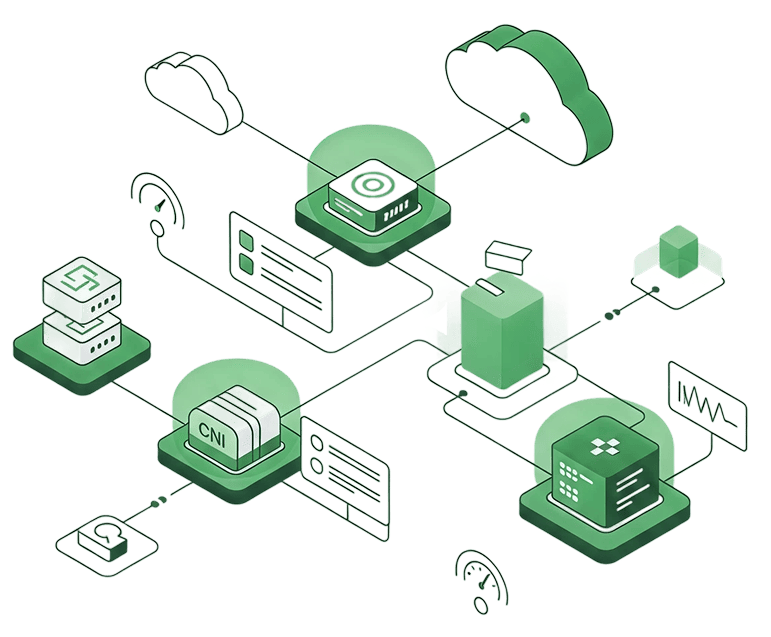
KubeDB simplifies Provisioning, Upgrading, Scaling, Volume Expansion, Monitor, Backup, Restore for various Databases in Kubernetes on any Public & Private Cloud
Lower administrative burden
Native Kubernetes Support
Performance
Availability and durability
Manageability
Cost-effectiveness
Security
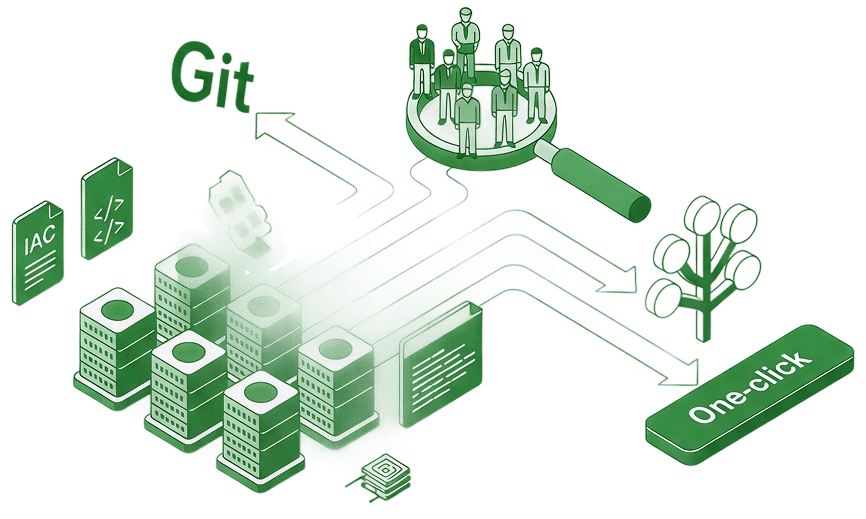
A complete Kubernetes native disaster recovery solution for backup and restore your volumes and databases in Kubernetes on any public and private clouds.
Declarative API
Backup Kubernetes Volumes
Backup Database
Backup Virtual Machines
Multiple Storage Support
Deduplication
Data Encryption
Volume Snapshot
KubeVault is a Git-Ops ready, production-grade solution for deploying and configuring Hashicorp's Vault on Kubernetes.
Support for Ceph storage interfaces and Kubernetes applications across the cluster lifecycle.
Block Storage with RBD
Shared Files with CephFS
Object Storage with RGW
Kubernetes Persistent Storage
How We Can Help
Choose the support and consulting services that fit your environment.
Troubleshooting and Recovery
Investigate cluster health warnings, unavailable services, degraded placement groups, and OSD failures. Plan recovery steps with data safety in mind.
Health and Configuration Review
Review cluster configuration, failure domains, capacity headroom, and operational risks, with recommendations tailored to your workloads.
Performance Optimization
Examine storage, network, and workload bottlenecks and identify tuning opportunities for block, file, and object storage.
Upgrade Planning
Prepare for Ceph upgrades and infrastructure changes with compatibility checks, rollout planning, and recovery considerations.
Monitoring and Operations
Improve visibility with health checks, alerts, operational procedures, and guidance for capacity and maintenance.
Team Enablement
Help your operators understand Ceph architecture, routine maintenance, and incident workflows.
From Architecture to Operations
Build a new storage platform or get help with an existing cluster.
Design and Sizing
Start with your capacity, performance, and availability requirements. We help evaluate the trade-offs before choosing a cluster design.
Assess workloads, storage interfaces, and growth projections.
Plan hardware, networking, failure domains, and capacity headroom.
Evaluate replication and erasure coding for appropriate workloads.
Deployment and Integration
Plan and implement Ceph for your infrastructure and the applications that depend on it.
Discuss deployment with cephadm or Rook on Kubernetes.
Configure RBD, CephFS, and the RADOS Gateway as appropriate.
Integrate Kubernetes workloads using Ceph CSI and storage classes.
Existing and New Clusters
Discuss your current deployment, planned infrastructure, or a specific storage problem. We can scope an engagement around your environment and priorities.
Ceph block, file, and object storage use cases.
On-premises, cloud, and hybrid environments.
Ceph deployed with cephadm or with Rook on Kubernetes.
A Practical Path to Resolution
Share the symptoms and business impact with us. We will discuss the scope, investigate with your team, and agree on the next steps.
Assess cluster health and identify contributing factors.
Coordinate proposed changes and access with your team.
Document findings and recommendations for follow-up.
Plan Your Engagement
Every environment is different. Contact us to agree on scope, coverage, response targets, and pricing.
Incident Assistance
Discuss a specific Ceph issue and the help your team needs to investigate and recover.
Ongoing Support
Define a support engagement around your clusters, operational needs, and desired coverage.
Design and Implementation
Plan a new Ceph platform with assistance for architecture, deployment, and integration.
Frequently Asked Questions
Here are a few of the questions we get the most. If you don't see what's on your mind, contact us anytime.
Ceph is an open-source distributed storage platform that provides block, file, and object storage from a cluster of storage nodes.
Can you help with an existing Ceph cluster?
Yes. Tell us how your cluster was deployed, which Ceph version you run, and the issue or outcome you want to address so we can discuss the scope.
Do you support Ceph on Kubernetes?
We can discuss support for Rook-managed Ceph and its integration with Kubernetes workloads, including persistent storage through Ceph CSI.
What response times and coverage are available?
Coverage, response targets, and escalation procedures are agreed as part of your engagement. Contact us with your requirements for a proposal.
Can AppsCode help with an urgent issue?
Contact us with the symptoms, impact, and your cluster details. We will discuss availability and the scope of assistance for your incident.
Can we use existing hardware?
Existing hardware may be suitable, depending on its capacity, performance, networking, and reliability. We can review it against your workload and availability requirements.
How much usable capacity will we need?
Usable capacity depends on the protection scheme, failure domains, workload, and operational headroom. We can help size the cluster for your requirements.
Is Ceph replication a replacement for backup?
No. Replication and erasure coding help protect against certain infrastructure failures, but they do not replace independent backups and tested recovery procedures.
Let's Talk About Your Ceph Cluster
Tell us about your environment, challenges, and support requirements. We will work with you on the next steps.
What They Are Talking About us
Trusted by top engineers at the most ambitious companies
Luca Ravazzolo
Product Manager at
Luca Ravazzolo
InterSystems was delighted to engage with AppsCode in the delicate, yet fundamental task of supporting durable, non-ephemeral workloads with Kubernetes. We needed the best-prepared, most-proficient database operator consulting in the industry. Given AppsCode's pedigree of database building operators, the decision was easy. No time was wasted and all objectives reached in an amazingly short period of time. I would recommend AppsCode consulting for any Kubernetes related work.
Mario Kozjak
Solutions Architect at
Mario Kozjak
Voyager made it simple and efficient for us to protect and initiate our bare metal Kubernetes workload. Its underlying technology and extensive L4 support along with seamless SSL integration is what made us choose Voyager over others. Voyager team is also very responsive when it comes to support. Great product!
Manuel Ramírez López
DevOps Engineer at
Manuel Ramírez López
Voyager is the easiest way to use the fast and reliable HAProxy as our ingress controller. At PriceHubble, it is the corner-stone of our blue/green deployments.
Richer Larivière
DevOPS Specialist at
Richer Larivière
I work with a few Kubernetes clusters and we use Voyager as our preferred ingress controller. We really like the ease of configuration. Documentation is pretty good. Also the use of HaProxy is important for us because it works really well with both L4 and L7 load balancing. One of our TCP services, Wayk Now, is able to withstand thousands of persistent connections very smoothly at the same time.
Daniel Gormly
Senior Developer at
Daniel Gormly
We really like using Voyager. Its straightforward and well-documented config and SSL (especially Let's Encrypt) has made our migration of services to Kubernetes a breeze. Each major version has been a very welcome update!
Dario Freddi
Founder & CEO at
Dario Freddi
We're using Voyager as part of most Astarte deployments and it's orchestrated also by our brand new Operator. We are glad to showcase that.


 Lower administrative burden